

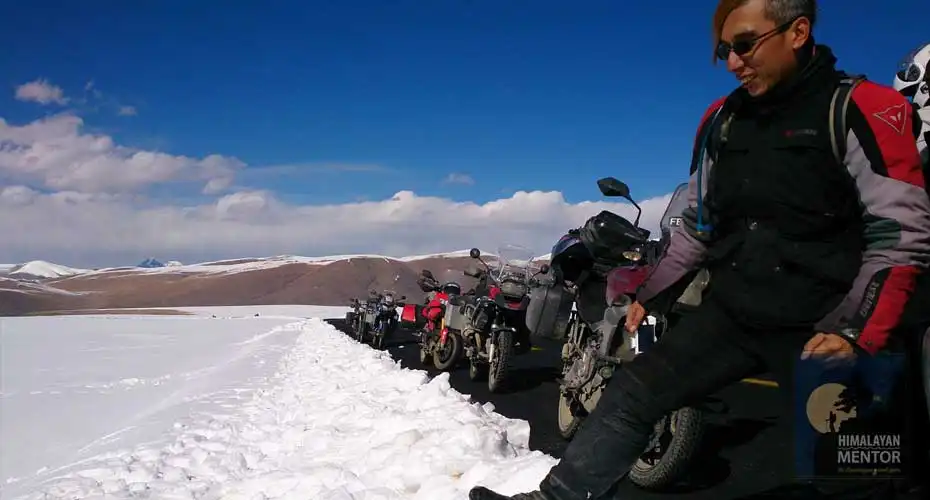
Kathmandu - Lhasa - Kathmandu motor biking tour highlights
- Enjoy the most passionate motor biking tour to Tibet
- Explore the cultural heritage sites of Shigatse, Gyantse & Lhasa
- Visit Everest base camp in Tibet side
- Visit Yamdrok Lake, one of the most beautiful lakes in Tibet
- Learn Tibetan Buddhist culture
Kathmandu - Lhasa - Kathmandu Motor Biking tour itinerary
Day 01: Bike ride from Kathmandu (1400) to Tibet border Kerung (Gyirong) (145 Km) 06-07 hours drive
Day 02: Biking from Kerung (Gyirong) to Tingri (4300m) / Lhatse (4,350m): 225 Km/244 Km
Day 03: Biking from Tingri/Lhaste to Shigatse (3,900 M): 244 Km
Day 04: Biking from Shigatse to Gyantse (3,950m): 90 Km
Day 05: Biking from Gyantse to Lhasa (3,650m): 261 Km
Day 06: Sightseeing tour in Lhasa
Day 07: Cultural sightseeing in Lhasa
Day 08: Motor Biking from Lhasa to Shigatse (3900m)
Day 09: Biking from Shigatse to Tingri
Day 10: Biking from Tingri to Ronbuk (Everest base camp) and bike ride back to Tingri
Day 11: Biking from Tingri to Kerung (2300m)
Day 12: Biking from Kerong to Kathmandu
Cost Includes
- Travel alien permit fee of Tibet
- Guided tour as per program
- All Monastery entrance fee
- Hotel accommodation in BB Basis
- Private transportation during the trip
Cost Excludes
- Lunch and dinner along the trip
- Flight to train tickets to/from Lhasa
- Personal travel insurance & emergency rescue evacuation cost
- Photography charges
- Tibet / China visa fee
Essential Information for Your Tibet Motorbiking Adventure
If you're gearing up for an unforgettable Tibet motorbiking tour, here's what you need to know before hitting the road:
Permits and Documentation: Ensure you have all the required permits and documentation to enter Tibet. This may include a Chinese visa, a Tibet Travel Permit, and any additional permits needed for specific areas.
Altitude Acclimatization: Tibet's high altitudes can pose health challenges. Acclimatize properly by spending a day or two in Lhasa before embarking on more strenuous routes.
Route Planning: Plan your route meticulously. Research road conditions, fuel stations, accommodations, and medical facilities along the way. Some areas may be remote, so it's crucial to be well-prepared.
Weather and Seasons: Tibet's weather can vary greatly. Pack accordingly, with layers to accommodate temperature fluctuations. The best time for motorbiking is during the warmer months from May to September.
Health Precautions: Consult your doctor about altitude sickness prevention. Carry any necessary medications and a basic first-aid kit.
Local Customs and Etiquette: Respect local customs and traditions. Be aware that Tibet is a deeply religious region, so treat monasteries and cultural sites with reverence.
Cultural Sensitivity: Interact with local communities with respect. Ask for permission before taking photographs of people, and be mindful of their privacy.
Language and Communication: English may not be widely spoken in remote areas. Learn a few basic phrases in Tibetan or Chinese to facilitate communication.
Local Currency and Banking: Carry sufficient local currency, as credit cards may not be widely accepted outside major cities. ATMs can be scarce in remote regions.
Emergency Contacts: Have local emergency contact numbers saved in your phone. This includes local authorities, medical services, and your country's embassy.
Motorbike Maintenance: Ensure your motorbike is in excellent condition before starting the tour. Carry essential tools and spare parts for minor repairs.
Pack Light: Travel light but carry essentials like water, snacks, a map, a GPS device, and a power bank.
Photography Regulations: Respect photography regulations, especially in sensitive areas. Always ask for permission before taking photos, particularly of people.
Environmental Respect: Leave no trace behind. Respect the natural beauty of Tibet by adhering to eco-friendly practices.
Local Cuisine: Embrace the local cuisine but be cautious with street food. Stick to bottled water to avoid any stomach issues.
Your Tibet motorbiking tour promises awe-inspiring landscapes, cultural encounters, and adventure like no other. Stay informed, stay safe, and make the most of this remarkable journey with Himalayan Mentor.