

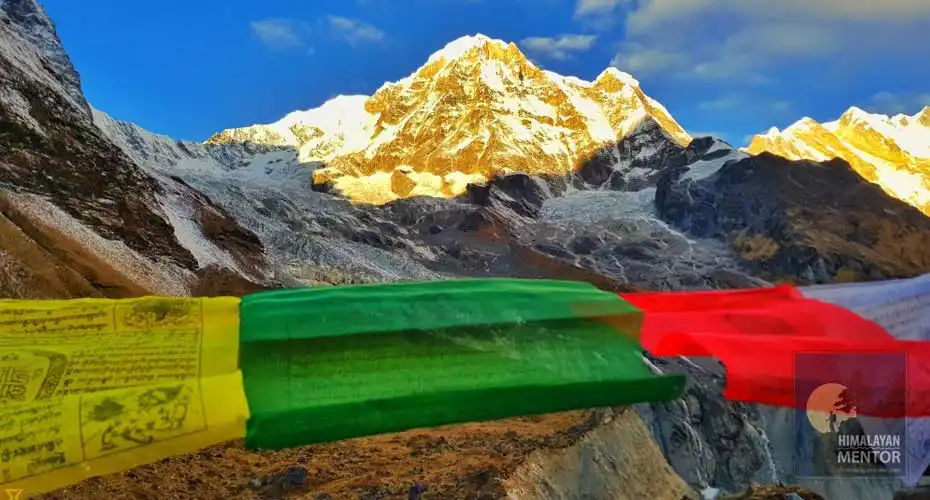
ABC with Mardi Himal Trek Highlights
- Reach Annapurna Base Camp (4,130 m) with 360° mountain views
- Scenic sunrise over the Annapurna range
- Explore traditional Gurung villages like Ghandruk
- Relax in natural hot springs at Jhinu Danda
- Trek the quieter Mardi Himal ridge trail
- Stunning close-up views from Mardi Himal Base Camp (~4,500 m)
- Diverse landscapes: forests, river, valleys, alpine terrain, and ridgelines
Annapurna Base Camp with Mardi Himal Trek Itinerary
Day 1: Drive from Pokhara to Birethanti and trek to Ghandruk (1,940 m | 4–5 hrs walk)
Drive from Pokhara to Birethanti, the starting point of the trek. Begin walking through terraced fields, riverside paths, and small villages before ascending to Ghandruk, a beautiful Gurung village known for its traditional culture and stunning mountain views.
Day 2: Trek from Ghandruk to Chhomrong (2,170 m | 5–6 hrs walk)
The trail descends to the Kimrong Khola and then climbs steadily through forested paths and stone staircases. Enjoy scenic views along the way before reaching Chhomrong, a key village and gateway to the Annapurna Sanctuary.
Day 3: Trek from Chhomrong to Bamboo (2,310 m | 5–6 hrs walk)
Start with a steep descent to the Chhomrong Khola, followed by a gradual ascent through dense bamboo and rhododendron forests. The trail follows the river, offering a peaceful and shaded walk to Bamboo.
Day 4: Trek from Bamboo to Deurali (3,230 m | 5–6 hrs walk)
Continue through lush forest before entering a more alpine landscape. Pass waterfalls and narrow valleys as the scenery becomes more dramatic, eventually reaching Deurali surrounded by steep cliffs.
Day 5: Trek from Deurali to Annapurna Base Camp (4,130 m | 5–6 hrs walk)
Ascend gradually via Machhapuchhre Base Camp, where the views begin to open up. Continue into the Annapurna Sanctuary and arrive at Annapurna Base Camp, surrounded by towering peaks in a spectacular natural amphitheater.
Day 6: Trek from ABC to Bamboo (2,310 m | 6–7 hrs walk)
Wake up early to enjoy a breathtaking sunrise over the Himalayas. After breakfast, retrace your steps and descend through the valley back to Bamboo.
Day 7: Trek from Bamboo to Jhinu Danda (1,780 m | 5–6 hrs walk)
Continue descending through forest trails and villages to Jhinu Danda. In the afternoon, you can relax at the nearby natural hot springs by the river.
Day 8: Trek from Jhinu Danda to Landruk and continue to Pitam Deurali (2,100 m | 6–7 hrs walk)
Cross a suspension bridge and climb to Landruk village, enjoying views of terraced hillsides and traditional settlements. Continue trekking uphill to Pitam Deurali. This is a longer but rewarding transition day connecting the two trekking routes.
Day 9: Trek from Pitam Deurali to Forest Camp (2,550 m | 4–5 hrs walk)
Leave the main Annapurna trail and enter the quieter Mardi Himal route. Trek through peaceful forests filled with rhododendron and moss-covered trees to reach Forest Camp.
Day 10: Trek from Forest Camp to High Camp (3,580 m | 6–7 hrs walk)
Climb steadily through Low Camp and Badal Danda, where the forest gradually opens up to scenic ridgelines. Enjoy panoramic mountain views as you reach High Camp.
Day 11: Trek from High Camp to Mardi Himal Base Camp and descend to Badal Danda (4,500 m to 3,210 m | 7–8 hrs walk)
Start early for a hike to Mardi Himal Base Camp, the highest point of the trek. Enjoy spectacular close-up views of the Annapurna range before descending back to Badal Danda for an overnight stay.
Day 12: Trek from Badal Danda to Siding and drive to Pokhara (5–6 hrs walk | 1.5–2 hrs drive)
Descend through forests and villages to Siding. From here, take a short drive back to Pokhara, marking the end of your trek.
Cost Includes
- Full board basis on the way of trekking- Breakfast, Lunch and Dinner -3 meals per day
- Overnight accommodation at tea house lodges
- Necessary trekking permits
- Supporting staffs (trekking guide and porter), as well as their necessary insurance, and accommodation meals allowance and salary
- Transporation as per itinerary
- Wildness First aid kit pack for the trekking
Cost Excludes
- Hotel or any services in Pokhara.
- Personal expenses such as laundry, telephone calls, alcoholic beverages, bottled drinks (including cold drinks and mineral/hot water/shower, tea-coffee, chocolate hot drinks), tips for the guide and porter
- Travel insurance and emergency evacuation cost.
- Additional costs- extra days stay, incase of flight cancellation due to the natural calamities, bad weather forecast and other unforeseen circumstances
- Personal trekking gear for the trek.
Useful Information (Annapurna base camp with Mardi Himal Trek)
Trek Location
This trek takes place in the Annapurna Conservation Area, one of Nepal’s most popular trekking regions. The journey starts and ends in Pokhara.
Difficulty Level
This is a moderate to challenging trek.
- Daily walking: 4–7 hours
- Steep ascents and descents
- High altitude up to 4,500 m
A good level of fitness is recommended.
Altitude & Acclimatization
- Max altitude: ~4,500 m (Mardi Himal Base Camp)
- ABC altitude: 4,130 m
The itinerary is designed for gradual ascent, but trekkers should still be aware of Altitude Sickness symptoms such as headache, nausea, and dizziness.
Best Time to Trek
The best seasons are:
- Spring (March–May): Clear skies, blooming rhododendrons
- Autumn (September–November): Stable weather, best mountain views
Winter is possible but cold; monsoon season brings rain and limited visibility.
Accommodation
Accommodation is in teahouses (mountain lodges) along the route.
- Basic but comfortable rooms
- Shared bathrooms in most places
- Limited facilities at higher altitudes
Food & Drinking Water
- Wide range of meals: Dal Bhat, noodles, soups, pasta, eggs
- Vegetarian options widely available
- Boiled or filtered water is recommended (avoid plastic bottles)
Required Permits
You will need ACAP Permit (Annapurna Conservation Area Permit) and other local permits which will be arranged by Himalayan Mentor on behalf of their clients.
Guide & Porter
- A licensed guide from Himalayan Mentor is highly recommended
- A porter can help carry your luggage
Electricity & Connectivity
- Charging available at teahouses (extra cost)
- Wi-Fi available in some areas but unreliable
- Mobile network works in lower regions only
Money & Expenses
- Carry cash (Nepali Rupees)
- No ATMs after Pokhara
- Extra costs: charging, Wi-Fi, hot showers, extra drinks of meals
Packing Essentials
- Trekking boots and warm clothing
- Down jacket & sleeping bag
- Trekking poles
- Water bottle & purification tablets
- Sunscreen, sunglasses, basic first aid
- You can find the details about Nepal trekking packing list here!
Safety & Emergency
- Basic health posts available on the trail
- Emergency evacuation by helicopter if needed, Himalayan Mentor will assist if needed
- Travel insurance covering high-altitude trekking is strongly recommended
Responsible Trekking
- Respect local culture and traditions
- Avoid plastic waste
- Stay on designated trails
- Support local teahouses and communities
Final Tip
This combined trek is more demanding than doing either route alone, but it rewards you with greater variety, fewer crowds, and a deeper Himalayan experience.
Frequently Asked Questions (FAQ) – ABC with Mardi Himal Trek
1. How difficult is the Annapurna Base Camp with Mardi Himal trek?
This trek is moderate to challenging. Daily walks range from 4–7 hours with steep ascents and descents. Good physical fitness is recommended, and some prior trekking experience helps, especially at high altitudes.
2. What is the maximum altitude of the trek?
- Mardi Himal Base Camp: ~4,500 m
- Annapurna Base Camp: 4,130 m
Altitude sickness is possible. Proper acclimatization and hydration are essential.
3. What is the best season to do this trek?
- Spring (March–May): Rhododendron blooms, clear mountain views
- Autumn (September–November): Stable weather, crisp skies
Winter is colder with limited facilities; monsoon season brings heavy rain and landslides.
4. How long is the trek?
- Standard itinerary: 12 days from Pokhara to Pokhara
- Walking hours: 4–7 hrs per day
- Distance covered: ~130–140 km total
5. Do I need a guide or porter?
A licensed guide is highly recommended for safety, navigation, and local insight. Porters are optional but useful for carrying heavy luggage.
6. What permits are required?
You will need:
- ACAP (Annapurna Conservation Area Permit) and local permits
These are arranged by Himalayan Mentor on behalf of their clients before starting the trek in Pokhara before the trek.
7. What type of accommodation is available?
- Mostly teahouses/lodges
- Shared bathrooms at most locations
- Hot showers available at extra cost
- More basic facilities at higher altitudes
8. What food and drinks are available?
- Local and international options: Dal Bhat, noodles, soups, pasta, eggs
- Vegetarian options widely available
- Drink boiled or filtered water; avoid untreated tap water
9. Is it safe for solo travelers?
Yes, with proper preparation. Trekking with a guide is recommended for safety, especially in remote areas like Mardi Himal.
10. What should I pack for the trek?
- Trekking boots, warm clothes, down jacket, sleeping bag
- Trekking poles
- Water bottle & purification tablets
- Sunglasses, sunscreen, first-aid kit
- Light rain jacket and daypack
11. Is mobile network and internet available?
- Mobile coverage exists in lower villages
- Wi-Fi is available in some teahouses, often at extra cost
- Connectivity is unreliable at higher camps
12. Can beginners do this trek?
Yes, with good fitness and proper preparation. This trek is manageable for beginners, though challenging days like Jhinu to Pitam Deurali or High Camp to Mardi Himal Base Camp require stamina.
13. How can I prevent altitude sickness?
- Ascend gradually
- Stay hydrated and eat regularly
- Avoid alcohol and smoking
- Take rest days if needed
- Consider medication like acetazolamide (consult a doctor before the trek)
14. Are hot springs included?
Yes, Jhinu Danda has natural hot springs that are optional to visit after the trek on Day 7.
15. Can this trek be done faster than 12 days?
Yes, experienced trekkers can combine days and shorten the trek to 10–11 days, but it increases daily walking hours and reduces acclimatization time.