
Mera Peak Climbing

100% 5 star based on 202 reviews from TripAdvisor. Mera Peak Climbing
Join Mera Peak climbing in 2026/2027 and summit Nepal’s highest trekking peak (6,476m). Non-technical expedition, expert Sherpa guides, and safe acclimatization.,Mera Peak Climbing,Mountain climbing,Mera Peak Climbing,Published: 2026-01-24,Last Updated: 2026-01-24,https://www.himalayanmentor.com/mera-peak-climbing.html, Excellent Tour Company for Nepal & Bhutan by December 1, 2020A true highlight of my trip around the world. A first-rate company that is very well organized for a Western traveler. Mera Peak Climbing 2195 USD In stock Jan 06, 2040 Mountain climbing
  • Duration: 16 Days
  • Difficulty: Challenging
  • Tour Type: Guided Climbing
  • Max altitude: 6476 m.
  • Transportation: Land & Air
  • Best Time: Sep. - Nov. & Mar. - Jun.

Mera Peak Climbing 2026/2027 - Highest Trekking Peak in Nepal

Mera Peak climbing in 2026 and 2027 is one of the most popular Himalayan adventures for trekkers and beginner mountaineers. Standing at 6,476 meters, Mera Peak is the highest trekking peak in Nepal, offering an achievable yet rewarding climbing experience in the Everest region. Located in the remote Hinku Valley, southeast of the main Everest trekking routes, Mera Peak provides a quieter and more scenic alternative to crowded trails.

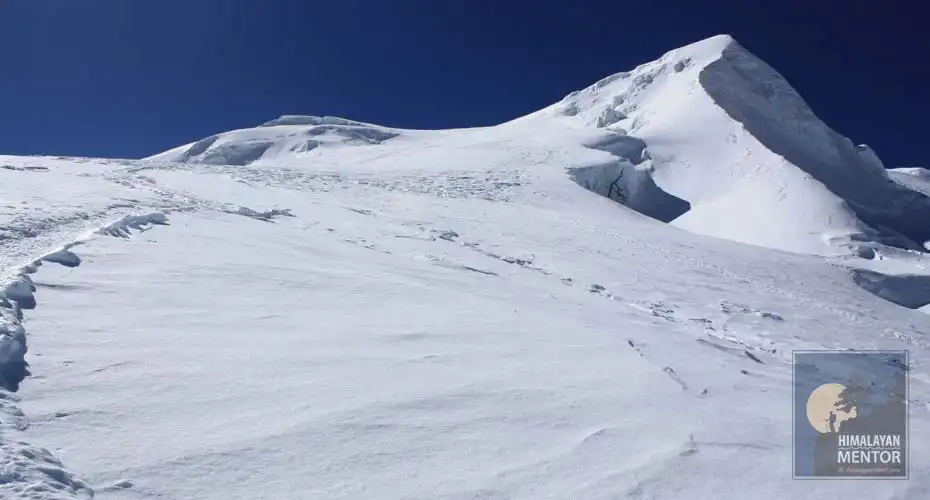
Although Mera Peak climbing is not highly technical, the extreme altitude makes it a physically demanding expedition. The summit ascent mainly involves gradual snow slopes rather than steep technical sections, making it ideal for climbers with good fitness and basic mountaineering skills. Reaching nearly 6,500 meters, however, requires proper acclimatization and expert guidance.

Mera Peak Climbing Route & Acclimatization

The classic Mera Peak climbing route follows the beautiful Hinku Valley, crossing the Zatra La Pass before continuing toward Thangnak and Khare Camp. This itinerary is carefully designed to ensure safe acclimatization, allowing climbers to adjust gradually to the altitude before the summit push.

Himalayan Mentor’s Mera Peak climbing itinerary is crafted based on years of experience and is suitable for climbers of varying fitness levels. With reasonable costs and well-planned acclimatization days, this route maximizes summit success while prioritizing safety and comfort.

Mera Peak Expedition Experience

A Mera Peak expedition offers a unique opportunity to fulfill your mountain climbing dream in Nepal’s Everest region. The expedition includes:

  • Teahouse lodge accommodation during the trekking phase
  • Fully supported camping above Khare Camp
  • Full-board meals with hygienic food preparation throughout the trip

These services ensure proper nutrition and comfort, which are essential for high-altitude climbing. Summit day from High Camp is physically demanding due to altitude, but the climb itself is technically straightforward, with snow slopes rarely exceeding 30 degrees.
Every year, Mera Peak climbing attracts climbers from around the world seeking a high-altitude Himalayan summit with less technical difficulty but incredible rewards.

Why Choose Mera Peak Climbing in Nepal?

Mera Peak climbing combines high-altitude adventure, stunning Himalayan scenery, and a non-technical ascent, making it one of the best introductory mountaineering expeditions in Nepal. With proper acclimatization, expert support, and well-planned logistics, climbers can safely achieve their Himalayan summit goal.

Mera Peak Climbing Highlights

  • Summit the highest trekking peak in Nepal – Mera Peak (6,476m)
  • Climb with experienced Sherpa guides and climbing experts
  • Trek through the less-crowded Hinku Valley route
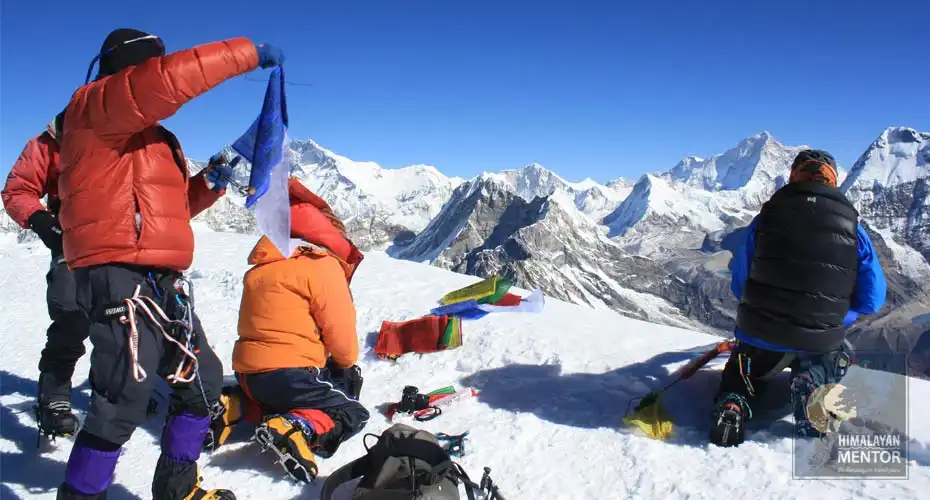
  • Enjoy breathtaking views of Mt. Everest (8,848m), Lhotse (8,516m), Cho Oyu (8,188m), Makalu, and more
  • Ideal first Himalayan peak for beginner climbers
  • Experience authentic Sherpa culture and hospitality

Mera Peak Climbing,Join Mera Peak climbing in 2026/2027 and summit Nepal’s highest trekking peak (6,476m). Non-technical expedition, expert Sherpa guides, and safe acclimatization.,https://www.himalayanmentor.com/assets/images/peak/mera-peak-climbing.webp,Last Updated: 2026-01-24,en-US, Himalayan Mentorhttps://www.himalayanmentor.com/assets/images/peak/mera-peak-climbing-small.webp

Trip Itinerary

Expand all Collapse all
Day 01: Arrival in Kathmandu, Nepal

Up on arrival meet our office representative at airport and transfer to hotel/ after refreshing complete the official formalities/ briefing about the preparation and rest of the day free for your own leisure.

Accommodation: Hotel Meals: None Place: Kathmandu Maximum Altitude: 1400m.

Day 02: Free day for preparation and official briefing

This is a free day for the trip preparation and provide the offical briefing at your hotel. We also collect the permit for Mera Peak climbing and check your equipment for the trip.

Accommodation: Hotel Meals: Breakfast Place: Kathmandu Maximum Altitude: 1400m.

Day 03: Fly from Kathmandu to Lukla (2,800m) & Trek to Chhutang (3,450m) | 3–4 Hours

Your adventure begins with a scenic mountain flight from Kathmandu to Lukla. After landing, you start trekking through lush forests and traditional Sherpa villages. The trail gradually ascends toward Chhutang, offering a peaceful introduction to the less-crowded Hinku Valley route.

Accommodation: Local Lodge Meals: Breakfast, Lunch & Dinner Place: Chhutang Maximum Altitude: 3450m.

Day 04: Trek from Chhutang (3,450m) to Thuli Kharka (4,160m) via Zatra La Pass (4,600m) | 5–6 Hours

Today’s trek is more challenging as you cross the Zatra La Pass. The ascent rewards you with panoramic views of surrounding Himalayan peaks. After reaching the pass, the trail descends to Thuli Kharka, a high-altitude pasture used by herders during summer months.

Accommodation: Local Lodge Meals: Breakfast, Lunch & Dinner Place: Thuli Kharka Maximum Altitude: 4600m.

Day 05: Trek from Thuli Kharka (4,160m) to Kothe (3,680m) | 5–6 Hours

The trail descends steeply through dense rhododendron and pine forests. You’ll follow the Hinku River as the landscape gradually becomes greener. Kothe is a beautiful riverside campsite and an important stop for climbers heading toward Mera Peak.

Accommodation: Local Lodge Meals: Breakfast, Lunch & Dinner Place: Kothe Maximum Altitude: 3680m.

Day 06: Trek from Kothe (3,680m) to Thangnak (4,355m) | 4–5 Hours

Today’s walk is steady and scenic, following the Hinku Valley with impressive views of Mera Peak in the distance. The trail passes yak pastures and glacial moraines before reaching Thangnak, a small settlement surrounded by dramatic mountain scenery.

Accommodation: Local Lodge Meals: Breakfast, Lunch & Dinner Place: Thangnag Maximum Altitude: 4355m.

Day 07: Trek from Thangnak (4,355m) to Khare Camp (5,095m) | 4–5 Hours

The trail ascends gradually as you approach Khare, the main base camp for Mera Peak climbing. You’ll cross rocky terrain and glacial landscapes. Upon arrival, the stunning north face of Mera Peak dominates the horizon.

Accommodation: Local Lodge Meals: Breakfast, Lunch & Dinner Place: Khare Camp Maximum Altitude: 5095m.

Day 08: Acclimatization & Training Day at Khare Camp (5,095m) | Optional Walks

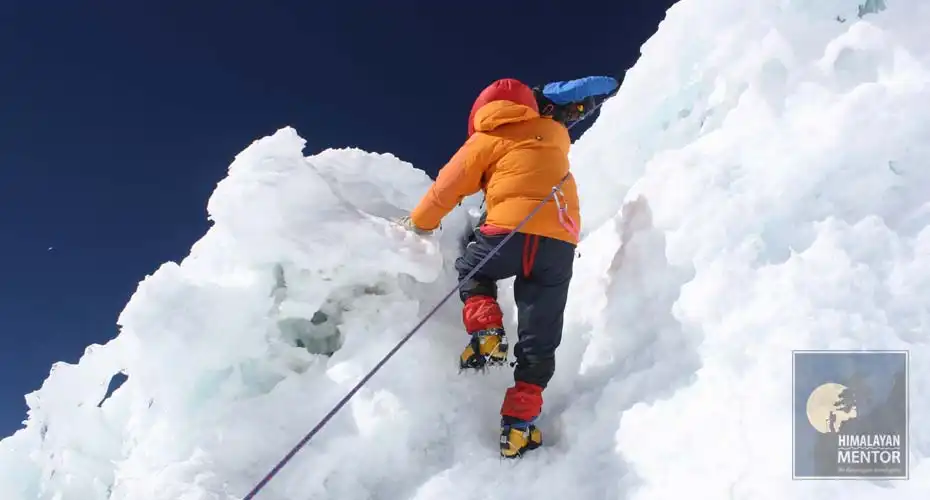
This is a vital acclimatization day to help your body adjust to the altitude. Your climbing guide will provide pre-climb training, including the use of crampons, ice axes, harnesses, and ropes. Short hikes around Khare further support acclimatization.

Accommodation: Local Lodge Meals: Breakfast, Lunch & Dinner Place: Khare Camp Maximum Altitude: 5095m.

Day 09: Trek from Khare Camp (5,095m) to Mera High Camp (5,800m) | 4–5 Hours

The route climbs gradually over the Mera Glacier. Using basic mountaineering equipment, you’ll ascend to High Camp, located on a rocky outcrop with breathtaking views of Everest, Makalu, Lhotse, Cho Oyu, and Kanchenjunga.

Accommodation: Tented Camp Meals: Breakfast, Lunch & Dinner Place: High Camp Maximum Altitude: 5800m.

Day 10: Summit Mera Peak (6,476m) & Descend to High Camp or Khare | 8–10 Hours

Summit day begins early in the morning. The ascent follows a gentle snow slope to the summit of Mera Peak, offering one of the finest panoramic views in the Himalayas. After reaching the summit, you descend carefully back to High Camp or Khare Camp, depending on conditions.

Accommodation: Tented Camp Meals: Breakfast, Lunch & Dinner Place: High Camp/ Base Camp Maximum Altitude: 6476m.

Day 11: Spare Day for Weather or Acclimatization | Flexibility Day

This contingency day is reserved for unfavorable weather, delayed flights, or additional acclimatization to ensure a safe and successful summit attempt.

Accommodation: Tented Camp Meals: Breakfast, Lunch & Dinner Place: Base Camp Maximum Altitude: 5095m.

Day 12: Trek from Khare Camp (5,095m) to Kothe (3,600m) | 5–6 Hours

After completing the climb, you descend along the familiar trail through alpine landscapes back to Kothe. The significant drop in altitude makes the walk more comfortable.

Accommodation: Local Lodge Meals: Breakfast, Lunch & Dinner Place: Kothe Maximum Altitude: 3600m.

Day 13: Trek from Kothe (3,600m) to Thuli Kharka (4,160m) | 5–6 Hours

The trail gradually ascends through forested paths as you return toward Thuli Kharka. Enjoy the peaceful surroundings and final views of the Hinku Valley.

Accommodation: Local Lodge Meals: Breakfast, Lunch & Dinner Place: Thuli Kharka Maximum Altitude: 4160m.

Day 14: Trek from Thuli Kharka (4,160m) to Lukla (2,800m) via Zatra La Pass (4,600m) | 6–7 Hours

Today you cross the Zatra La Pass once again before descending to Lukla. This is your final trekking day, offering a sense of achievement as you return to civilization.

Accommodation: Local Lodge Meals: Breakfast, Lunch & Dinner Place: Lukla Maximum Altitude: 4600m.

Day 15: Fly from Lukla to Kathmandu | 30–35 Minutes

Take an early morning flight back to Kathmandu, enjoying your last views of the Himalayan range. Upon arrival, you’ll be transferred to your hotel.

Accommodation: Hotel Meals: Breakfast Place: Kathmandu Maximum Altitude: 1400m.

Day 16: Final Departure

You will be transferred to the international airport according to your departure schedule, marking the end of your Mera Peak climbing adventure.

Accommodation: None Meals: Breakfast Place: - Maximum Altitude: 1400m.

Narayan Kadel - Kesh
Plan Your Trip with an Expert
Narayan Kadel (Mr. Kesh)

Above itinerary for Mera Peak Climbing might not be suitable for everyone. So please feel free to send us your requirements to info@himalayanmentor.com or call us at +977 9841 875661 (Direct Call/Whatsapp/Signal) to customize as you wish.

Inclusion in the Package

Included

  • Airport transfers - pick up and drop upon arrival and departure 
  • Entry permit to Sagarmatha National Park, peak permit & garbage deposit
  • Supporting staffs (trekking guide and porter), as well as their necessary insurance, and accommodation meals allowance and salary
  • Climbing Sherpa and climber’s personal equipments
  • Breakfast, Lunch and Dinner -3 meals per day prepared by Himalayan Mentor’s kitchen team and overnight accommodation in tea house lodge along the trail and tented camp & food during the climbing period
  • Necessary snow bars, ropes, rock piton and ice screws for climbing
  • Domestic airfare and airport tax round trip (Kathmandu - Lukla – Kathmandu for the trekking )
  • 3- Nights accommodation in Kathmandu in BB basis before and after the trek.
  • Comprehensive First Aid kit pack

Excluded

  • International flight ticket and airport tax
  • Lunch and dinner during the Kathmandu stay
  • Travel / medical insurance and emergency evacuation cost
  • Personal expenses such as laundry, telephone calls, alcoholic beverages, bottled drinks (including cold drinks and mineral/hot water/shower), tips for the guide, porter & other staffs etc. 
  • Additional costs- extra days stay, incase of flight cancellation due to the natural calamities, bad weather forecast and other unforeseen circumstances
  • Personal trekking and climbing gear for the trip
  • High alpine tent, high foods and sleeping bag
  • Oxygen, Mask & Regulator, Gammo Bag & satellite phone

Availability

This trip is a private guided one and can be arranged on your requested date. The group size for this trip is one to above.

Useful Information - Mera Peak Climbing

Why Choose Mera Peak Climbing
  • Highest trekking peak in Nepal
  • Ideal Himalayan expedition for beginners
  • Less crowded route via Hinku Valley
  • Stunning views of Everest, Lhotse, Makalu, Cho Oyu, and Kanchenjunga
Best Season for Mera Peak Climbing

The best time for Mera Peak climbing is during:

  • Spring (March–May): Stable weather, warmer temperatures, high summit success rate
  • Autumn (September–November): Clear skies, excellent visibility, dry trails

Winter (December–February) is extremely cold, while monsoon season (June–August) brings heavy rain and poor trail conditions.

Weather & Temperature (Season-Wise)

Weather conditions on Mera Peak vary significantly depending on the season and altitude. Temperatures become much colder above Khare Camp, especially at High Camp and near the summit.

Spring Season (March–May) – Best for Climbing

  • Lower elevations (Lukla–Kothe): 10°C to 18°C (day) | 0°C to 5°C (night)
  • High Camp (5,800m): -5°C to 5°C (day) | -10°C to -15°C (night)
  • Summit temperature: -15°C to -20°C

Spring offers stable weather, longer daylight hours, and favorable climbing conditions, making it one of the most popular seasons for Mera Peak climbing.

Autumn Season (September–November) – Clear Skies & Best Views

  • Lower elevations: 8°C to 16°C (day) | 0°C to 5°C (night)
  • High Camp: -5°C to 0°C (day) | -12°C to -18°C (night)
  • Summit temperature: -18°C to -25°C

Autumn provides crisp air and excellent mountain visibility, though temperatures are slightly colder than in spring.

Winter Season (December–February) – Very Cold & Challenging

  • Lower elevations: 5°C to 10°C (day) | -5°C to 0°C (night)
  • High Camp: -10°C to -15°C (day) | -20°C to -30°C (night)
  • Summit temperature: -25°C to -30°C or lower

Winter climbing is possible but extremely challenging due to severe cold, heavy snow, and strong winds.

Monsoon Season (June–August) – Not Recommended

  • Lower elevations: 15°C to 22°C (day) | 10°C to 15°C (night)
  • High Camp: 0°C to 5°C (day) | -5°C to -10°C (night)
  • Summit temperature: -5°C to -10°C

Monsoon season brings heavy rainfall, cloud cover, slippery trails, and limited visibility, making climbing conditions unfavorable.

Clothing Recommendation

Regardless of the season, climbers should use proper layered clothing, including:

  • Thermal base layers
  • Insulating mid-layers
  • Down jacket rated for -20°C or lower
  • Windproof and waterproof outer shell

High-quality insulation is essential for safety and comfort, especially during summit night.

Difficulty Level & Fitness Requirement

Mera Peak is considered a non-technical trekking peak, but it is physically demanding due to its high altitude of 6,476m.

  • Suitable for beginner climbers with good physical fitness
  • Requires the ability to walk 5–7 hours per day at high altitude
  • Previous trekking experience above 4,000m is recommended

Basic mountaineering skills are taught during the expedition.

Altitude & Acclimatization

Proper acclimatization is key to a successful Mera Peak summit.

  • Highest point: Mera Peak Summit – 6,476m
  • Acclimatization days included at Khare Camp
  • Gradual ascent via the Hinku Valley ensures safer altitude gain

Guides monitor health conditions daily to reduce the risk of altitude sickness.

Accommodation During the Trip
  • Teahouse lodges during the trekking phase
  • Fully supported camping above Khare Camp
  • Basic but comfortable lodging in remote areas

Shared facilities are common at higher elevations.

Meals & Drinking Water
  • Three meals per day during trekking and climbing
  • Hygienic, high-energy meals prepared by trained kitchen staff
  • Boiled or purified drinking water provided

A vegetarian diet is recommended at higher altitudes for better digestion.

Guides, Safety & Support
  • Government-licensed trekking guides
  • Experienced Sherpa climbing guides for summit day
  • First-aid kits, oxygen support, and emergency evacuation arrangements

Safety briefings and technical training are provided before summit attempts.

Climbing Equipment

Essential equipment includes:

  • Crampons
  • Ice axe
  • Harness and helmet
  • Carabiners, ascender, and safety ropes

Group climbing equipment is provided; personal gear can be rented in Kathmandu.

Travel Insurance (Mandatory)

Climbers must have travel insurance covering:

  • High-altitude trekking and climbing up to 6,500m
  • Emergency helicopter rescue
  • Medical treatment and evacuation
Communication & Internet
  • Limited mobile network in trekking areas
  • Wi-Fi available in some lodges at extra cost
  • No reliable connectivity at High Camp
Money & Currency
  • Nepalese Rupees (NPR) is required
  • ATMs available only in Kathmandu and Lukla
  • Carry sufficient cash for personal expenses