Island Peak Climbing with Everest Base Camp Trek (EBC)

100% 5 star based on 202 reviews from TripAdvisor. Island Peak Climbing
Climb Island Peak (6160m) in 2026 with Everest Base Camp trekking. Expert guides, perfect acclimatization, and a thrilling Himalayan adventure in Nepal.,Island Peak Climbing,Mountain climbing,Island peak climbing with EBC,Published: 2026-01-24,Last Updated: 2026-01-24,https://www.himalayanmentor.com/island-peak-climbing.html, Excellent Tour Company for Nepal & Bhutan by December 1, 2020A true highlight of my trip around the world. A first-rate company that is very well organized for a Western traveler. Island Peak Climbing 2195 USD In stock Jan 06, 2040 Mountain climbing
  • Duration: 19 Days
  • Difficulty: Challenging
  • Tour Type: Guided Climbing
  • Max altitude: 6160 m.
  • Transportation: Land & Air
  • Best Time: Sep. - Nov. & Mar. - Jun.

Island Peak Climbing in 2026 with Everest Base Camp Trek

Experience the ultimate adventure in Nepal by combining Island Peak climbing with the Everest Base Camp (EBC) trek in 2026. Island Peak, also known as Imja Tse Peak (6160m), is one of Nepal’s most popular trekking peaks. Located beyond the Imja Khola valley near Chhukhung, it offers climbers breathtaking Himalayan views and serves as excellent preparation for higher Himalayan expeditions.

Why Choose Island Peak Climbing with Everest Base Camp Trek

Our Island Peak expedition is designed to combine trekking and climbing, allowing you to acclimatize properly while exploring Everest Base Camp. During this adventure, you will also climb Kalapatthar (5545m) and trek to Everest Base Camp, making your climb safer, smoother, and more enjoyable. This itinerary is ideal for climbers who want to test their skills on a Himalayan peak before attempting more extreme high-altitude expeditions.

Island Peak Climbing Route

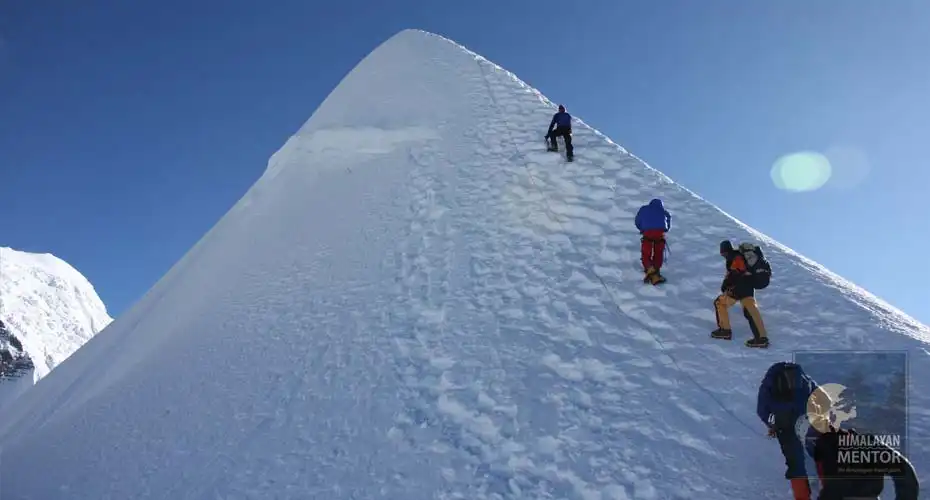
The standard route for Island Peak climbing follows the south-east flank and south-west ridge. The general base camp is set at 5100m, between Imja Tse and the Imja Glacier moraine. Climbers should be aware that the route can be technically demanding above the high camp, requiring excellent physical condition and proper training.

Our experienced guides provide all necessary technical instructions, including avalanche precautions during heavy snowfall. With expert guidance, climbers can safely navigate the challenging sections and enjoy the thrill of summiting Island Peak.

Join Himalayan Mentor for an unforgettable Island Peak climbing expedition in 2026/2027, combined with the legendary Everest Base Camp trek. Perfect for adventure enthusiasts seeking a thrilling yet manageable high-altitude experience in Nepal.

Highlights of Island Peak Climbing with EBC Trek

  • Summit Island Peak (6160m), one of Nepal’s most popular trekking peaks
  • Explore Everest Base Camp (5364m) and surrounding areas
  • Climb Kalapatthar (5545m) for panoramic Himalayan views
  • Safe acclimatization strategy combining trekking and climbing
  • Expert guides providing technical training and safety briefings
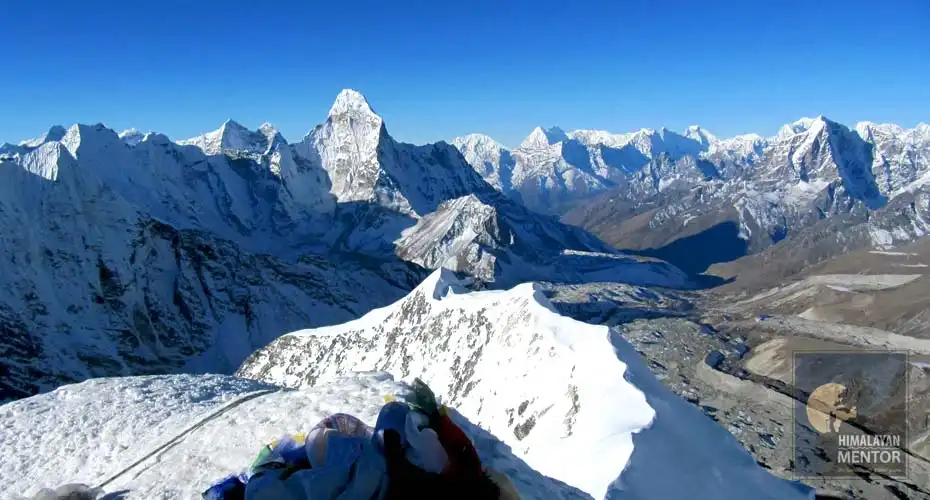
  • Make lifetime memory with the magnificent views of the snow-capped mountains, including Mt. Everest, Mt. Makalu, Mt Ama Dablam, Mt. Cho Oyu, Mt. Lhotse, and many others from Island peak summit
Island Peak Climbing,Climb Island Peak (6160m) in 2026 with Everest Base Camp trekking. Expert guides, perfect acclimatization, and a thrilling Himalayan adventure in Nepal.,https://www.himalayanmentor.com/assets/images/peak/island-peak-climbing.webp,Last Updated: 2026-01-24,en-US, Himalayan Mentorhttps://www.himalayanmentor.com/assets/images/peak/island-peak-climbing-small.webp

Trip Itinerary

Expand all Collapse all
Day 01: Arrival in Kathmandu, Nepal

Up on arrival meet our office representative at airport and transfer to hotel/ after refreshing complete the official formalities/ briefing about the preparation and rest of the day free for your own leisure.

Accommodation: Hotel Meals: None Place: Kathmandu Maximum Altitude: 1400m.

Day 02: Free day for preparation and official briefing

This is a free day for the trip preparation and provide the offical briefing at your hotel. We also collect the permit for Island (Imja Tse) Peak climbing and check your equipment for the trip.

Accommodation: Hotel Meals: Breakfast Place: Kathmandu Maximum Altitude: 1400m.

Day 03: Fly from Kathmandu to Lukla (2,800m) & Trek to Phakding (2,600m) | 3–4 Hours

Your adventure begins with an exciting scenic flight from Kathmandu to Lukla, offering stunning aerial views of the Himalayan range. After landing at Lukla’s iconic mountain airstrip, you start trekking through beautiful Sherpa villages, mani walls, and prayer wheels. The trail gently descends alongside the Dudh Koshi River to reach Phakding, making this a short and easy walk ideal for acclimatization.

Accommodation: Local Lodge Meals: Breakfast, Lunch & Dinner Place: Phakding Maximum Altitude: 2600m.

Day 04: Trek from Phakding (2,600m) to Namche Bazaar (3,500m) | 5–6 Hours

Today’s trek follows the Dudh Koshi River, crossing several suspension bridges, including the famous Hillary Suspension Bridge. The trail passes through pine forests and small settlements before a steep ascent leads you to Namche Bazaar, the vibrant trading hub of the Khumbu region. From here, you’ll enjoy your first views of Everest, weather permitting.

Accommodation: Local Lodge Meals: Breakfast, Lunch & Dinner Place: Namche Bazaar Maximum Altitude: 3500m.

Day 05: Acclimatization Day at Namche Bazaar (3,500m) | Optional Walks

This rest day is crucial for proper acclimatization. You can explore Namche Bazaar, visit the Sherpa Museum, or hike to nearby viewpoints such as Everest View Hotel. These short hikes help your body adapt to the altitude while allowing you to enjoy spectacular Himalayan scenery.

Accommodation: Local Lodge Meals: Breakfast, Lunch & Dinner Place: Namche Bazaar Maximum Altitude: 3500m.

Day 06: Trek from Namche Bazaar (3,500m) to Tengboche (3,870m) | 5–6 Hours

The trail contours along hillsides with panoramic views of Everest, Lhotse, and Ama Dablam. After descending to Phunki Tenga, you’ll climb through rhododendron forests to Tengboche, home to the largest monastery in the Khumbu region. The peaceful surroundings and mountain views make this a memorable day.

Accommodation: Local Lodge Meals: Breakfast, Lunch & Dinner Place: Tengboche Maximum Altitude: 3870m.

Day 07: Trek from Tengboche (3,870m) to Dingboche (4,410m) | 5–6 Hours

Leaving Tengboche, the trail descends through forests and crosses the Imja Khola River. You’ll pass through Pangboche village before ascending to Dingboche, located in a wide alpine valley. The landscape becomes more rugged, and the air noticeably thinner as you gain altitude.

Accommodation: Local Lodge Meals: Breakfast, Lunch & Dinner Place: Dingboche Maximum Altitude: 4410m.

Day 08: Trek from Dingboche (4,410m) to Lobuche (4,940m) | 4–5 Hours

Today’s trek gradually ascends through open alpine terrain. You’ll pass memorials dedicated to climbers who lost their lives on Everest, offering a moment of reflection. The trail continues along the Khumbu Glacier before reaching Lobuche, surrounded by dramatic Himalayan peaks.

Accommodation: Local Lodge Meals: Breakfast, Lunch & Dinner Place: Lobuche Maximum Altitude: 4940m.

Day 09: Trek from Lobuche (4,940m) to Gorakshep (5,164m) & Visit Everest Base Camp (5,364m) | 6–7 Hours

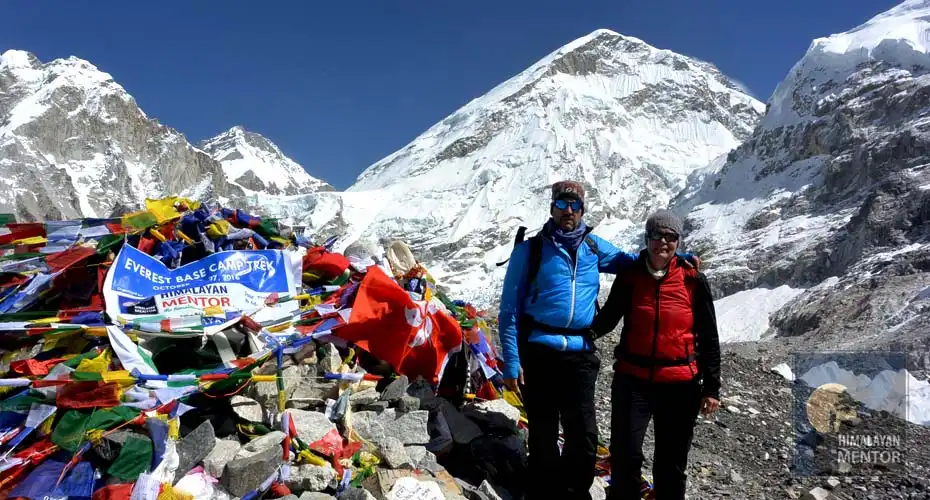
After a short trek to Gorakshep, you’ll continue towards the legendary Everest Base Camp. Walking alongside the Khumbu Glacier, you’ll reach the base camp area where climbers prepare for Everest expeditions. After spending time exploring and taking photos, you’ll return to Gorakshep for the night.

Accommodation: Local Lodge Meals: Breakfast, Lunch & Dinner Place: Gorakshep Maximum Altitude: 5364m.

Day 10: Hike to Kalapatthar (5,545m) & Trek to Dingboche (4,410m) | 5–6 Hours

An early morning hike to Kalapatthar rewards you with one of the best panoramic views of Mount Everest, Nuptse, and surrounding peaks. After descending to Gorakshep for breakfast, you retrace your steps down to Dingboche, enjoying easier walking and warmer air.

Accommodation: Local Lodge Meals: Breakfast, Lunch & Dinner Place: Dingboche Maximum Altitude: 5545m.

Day 11: Trek from Dingboche (4,410m) to Chhukung (4,800m) | 3 Hours

Today is a short but scenic trek through the Imja Valley. The trail gently ascends with stunning views of Lhotse, Island Peak, and Ama Dablam. Chhukung is a small settlement used by climbers preparing for Island Peak and nearby expeditions.

Accommodation: Local Lodge Meals: Breakfast, Lunch & Dinner Place: Chhukung Maximum Altitude: 4800m.

Day 12: Trek from Chhukung (4,800m) to Island Peak Base Camp (5,100m) | 3–4 Hours

The trail follows a rocky path across alpine terrain toward Island Peak Base Camp. As you approach, the dramatic south face of Island Peak dominates the skyline. Upon arrival, you’ll set up camp and receive a briefing from your climbing guide about the upcoming summit attempt.

Accommodation: Tented Camp Meals: Breakfast, Lunch & Dinner Place: Island Base Camp Maximum Altitude: 5100m.

Day 13: Island Peak Summit (6,160m) & Return to Base Camp | 8–10 Hours

Summit day begins early in the morning. You’ll climb steep snow and ice sections using crampons, ropes, and ice axes under expert guidance. After reaching the summit of Island Peak, enjoy breathtaking views of Lhotse, Makalu, and Baruntse. Following the summit, you’ll descend carefully back to Island Peak Base Camp.

Accommodation: Tented Camp Meals: Breakfast, Lunch & Dinner Place: Island Peak Base Camp Maximum Altitude: 5100m.

Day 14: Spare Day for Climbing | Flexibility Day

This spare day is reserved for weather delays or additional acclimatization. It ensures safety and increases the success rate of your Island Peak climb in case of unfavorable conditions.

Accommodation: Tented Camp Meals: Breakfast, Lunch & Dinner Place: Island Peak Base Camp Maximum Altitude: 5100m.

Day 15: Trek from Island Peak Base Camp (5,100m) to Tengboche (3,870m) | 5–6 Hours

After completing the climb, you descend through Chhukung and Pangboche, retracing familiar trails. The drop in altitude makes walking more comfortable, and you’ll once again reach the peaceful surroundings of Tengboche.

Accommodation: Local Lodge Meals: Breakfast, Lunch & Dinner Place: Tengboche Maximum Altitude: 3870m.

Day 16: Trek from Tengboche (3,870m) to Monjo (2,835m) | 5–6 Hours

The trail descends through lush forests and crosses suspension bridges over the Dudh Koshi River. You’ll pass through Namche Bazaar before continuing downhill to Monjo, located near the entrance of Sagarmatha National Park.

Accommodation: Local Lodge Meals: Breakfast, Lunch & Dinner Place: Monjo Maximum Altitude: 2835m.

Day 17: Trek from Monjo (2,835m) to Lukla (2,800m) | 5–6 Hours

Your final trekking day follows familiar trails back to Lukla. Celebrate the successful completion of your Island Peak climbing and Everest Base Camp adventure with your trekking team.

Accommodation: Local Lodge Meals: Breakfast, Lunch & Dinner Place: Lukla Maximum Altitude: 2800m.

Day 18: Fly from Lukla (2,800m) to Kathmandu | 30–35 Minutes

Take a morning flight back to Kathmandu, enjoying last views of the Himalayas. Upon arrival, you’ll be transferred to your hotel for rest and relaxation.

Accommodation: Hotel Meals: Breakfast Place: Kathmandu Maximum Altitude: 1400m.

Day 19: Final Departure

According to your flight schedule, you’ll be transferred to the international airport for your onward journey, marking the end of an unforgettable Island Peak climbing experience.

Accommodation: None Meals: Breakfast Place: - Maximum Altitude: 1400m.

Narayan Kadel - Kesh
Plan Your Trip with an Expert
Narayan Kadel (Mr. Kesh)

Above itinerary for Island Peak Climbing might not be suitable for everyone. So please feel free to send us your requirements to info@himalayanmentor.com or call us at +977 9841 875661 (Direct Call/Whatsapp/Signal) to customize as you wish.

Inclusion in the Package

Included

  • Airport transfers - pick up and drop upon arrival and departure 
  • Entry permit to Sagarmatha National Park, peak permit & garbage deposit
  • Supporting staffs (trekking guide and porter), as well as their necessary insurance, and accommodation meals allowance and salary
  • Climbing Sherpa and climber’s personal equipments
  • Breakfast, Lunch and Dinner -3 meals per day and overnight accommodation in tea house lodge along the trail and tented camp & food during the climbing period
  • Necessary snow bars, ropes, rock piton and ice screws for climbing
  • Domestic airfare and airport tax round trip (Kathmandu - Lukla – Kathmandu for the trekking )
  • 3- Nights accommodation in Kathmandu in BB basis before and after the trek.
  • Comprehensive First Aid kit pack

Excluded

  • International flight ticket and airport tax
  • Lunch and dinner during the Kathmandu stay
  • Travel / medical insurance and emergency evacuation cost
  • Personal expenses such as laundry, telephone calls, alcoholic beverages, bottled drinks (including cold drinks and mineral/hot water/shower), tips for the guide, porter & other staffs etc. 
  • Additional costs- extra days stay, incase of flight cancellation due to the natural calamities, bad weather forecast and other unforeseen circumstances
  • Personal trekking and climbing gear for the trip
  • High alpine tent, high foods and sleeping bag
  • Oxygen, Mask & Regulator, Gammo Bag & satellite phone

Availability

This trip is a private guided one and can be arranged on your requested date. The group size for this trip is one to above.

Useful Information - Island Peak Climbing with Everest Base Camp Trek

Why Choose Island Peak Climbing with EBC Trek
  • Best acclimatization route for Island Peak
  • Ideal training climb for future Himalayan expeditions
  • Combines trekking, culture, and technical climbing
  • High summit success rate with expert guidance
Best Time to Climb Island Peak

The best seasons for Island Peak climbing are:

  • Spring (March–May): Stable weather, warmer temperatures, and excellent summit success rates
  • Autumn (September–November): Clear skies, crisp mountain views, and ideal trekking conditions

Winter and monsoon seasons are not recommended due to heavy snowfall, extreme cold, and poor visibility.

Weather & Temperature (Season-wise Average)

Weather in the Everest region varies significantly with altitude and season. Below is an approximate average temperature range during Island Peak climbing seasons:

Spring Season (March–May) – Best for Climbing

  • Lower elevations (Lukla–Namche): 10°C to 18°C (day) | 0°C to 5°C (night)
  • Higher elevations (EBC & Island Peak Base Camp): 5°C to -5°C (day) | -10°C to -15°C (night)
  • Summit temperature: -15°C to -20°C
    Stable weather, longer daylight, high summit success rate

Autumn Season (September–November) – Best Visibility

  • Lower elevations: 8°C to 16°C (day) | 0°C to 5°C (night)
  • Higher elevations: 0°C to -8°C (day) | -12°C to -18°C (night)
  • Summit temperature: -18°C to -22°C
    Clear skies, crisp air, excellent mountain views

Winter Season (December–February) – Cold & Challenging

  • Lower elevations: 5°C to 10°C (day) | -5°C to 0°C (night)
  • Higher elevations: -5°C to -12°C (day) | -15°C to -25°C (night)
  • Summit temperature: -25°C to -30°C
    Extremely cold, heavy snow, fewer summit attempts

Monsoon Season (June–August) – Not Recommended

  • Lower elevations: 15°C to 22°C (day) | 10°C to 15°C (night)
  • Higher elevations: 5°C to 10°C (day) | 0°C to 5°C (night)
  • Summit temperature: -5°C to -10°C
    Rain, cloud cover, slippery trails, poor visibility

Clothing Recommendation

  • Use layered clothing (base, insulating, and shell layers)
  • Down jacket rated -20°C or lower for summit night
  • Proper insulation, gloves, windproof outerwear, and thermal wear are essential
Climbing Equipment

Essential climbing gear includes:

  • Crampons
  • Ice axe
  • Harness
  • Helmet
  • Ascender and carabiners

Group climbing equipment is usually provided, while personal gear can be rented in Kathmandu or Namche Bazaar.

Trip Difficulty & Fitness Level

Island Peak climbing with EBC trek is a moderate to challenging adventure. While previous technical climbing experience is not mandatory, participants should be:

  • Physically fit with good endurance
  • Comfortable walking 5–7 hours per day at high altitude
  • Willing to train before the trip (cardio, hiking, strength training)

Basic mountaineering skills such as using crampons and ice axes will be taught at base camp.

Altitude & Acclimatization

This itinerary is carefully designed to allow proper acclimatization by combining the Everest Base Camp trek with gradual altitude gain.

  • Maximum elevation: Island Peak Summit – 6,160m
  • Acclimatization days included at Namche Bazaar and flexible climbing days

Our guides closely monitor health conditions to minimize the risk of altitude sickness.

Required Permits

To join this trip, the following permits are required:

  • Sagarmatha National Park Permit
  • Khumbu Pasang Lhamu Rural Municipality Permit
  • Island Peak Climbing Permit (issued by Nepal Mountaineering Association)

All permits are arranged by Himalayan Mentor.

Accommodation during Island Peak Climbing with EBC Trek
  • Teahouse lodges during the Everest Base Camp trek
  • Tented camping at Island Peak Base Camp
  • Rooms are basic but clean, with shared facilities at higher altitudes

Hot showers and charging facilities are available in lower regions at extra cost.

Meals During the Trip
  • Three meals per day (breakfast, lunch, and dinner)
  • Nutritious trekking meals such as dal bhat, noodles, rice, soups, and pasta
  • Special climbing meals provided during the summit phase

A vegetarian diet is recommended at higher altitudes for better digestion.

Guides, Safety & Support
  • Government-licensed trekking and climbing guides
  • Experienced climbing Sherpas for summit day
  • First-aid kits, oxygen support (if needed), and emergency evacuation assistance

Safety briefings and technical training are provided at Island Peak Base Camp.

Travel Insurance

Comprehensive travel insurance is mandatory and must cover:

  • High-altitude trekking and climbing up to 6,500m
  • Emergency helicopter evacuation
  • Medical treatment
Communication & Internet
  • Mobile network available in most trekking villages
  • Wi-Fi available in lodges for an additional cost
  • Limited or no connectivity at Island Peak Base Camp